
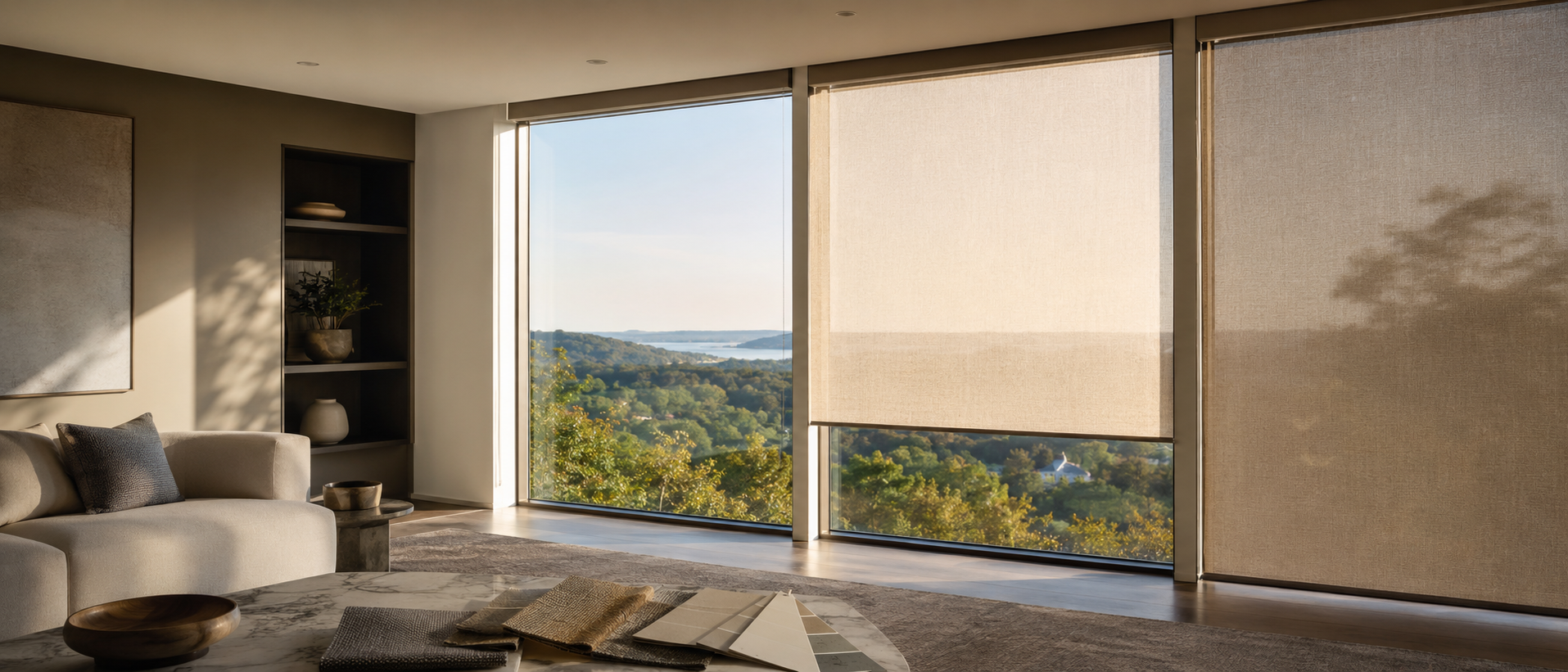
SES Daylight Design Guide · August 2026
How to choose motorized shade fabrics.
Start with the experience you want at the window—then choose the weave, color, and opacity that make it possible.
The Five-Question Filter
Do not begin with a color swatch.
View
How much connection to the outdoors should remain?
Privacy
Who can see inward during the day—and after dark?
Glare
Where do direct sun and reflections interrupt work, reading, or television?
Heat + UV
Which exposures need stronger solar control and furnishing protection?
Darkness
Does the room need dimming, privacy, or true room darkening?
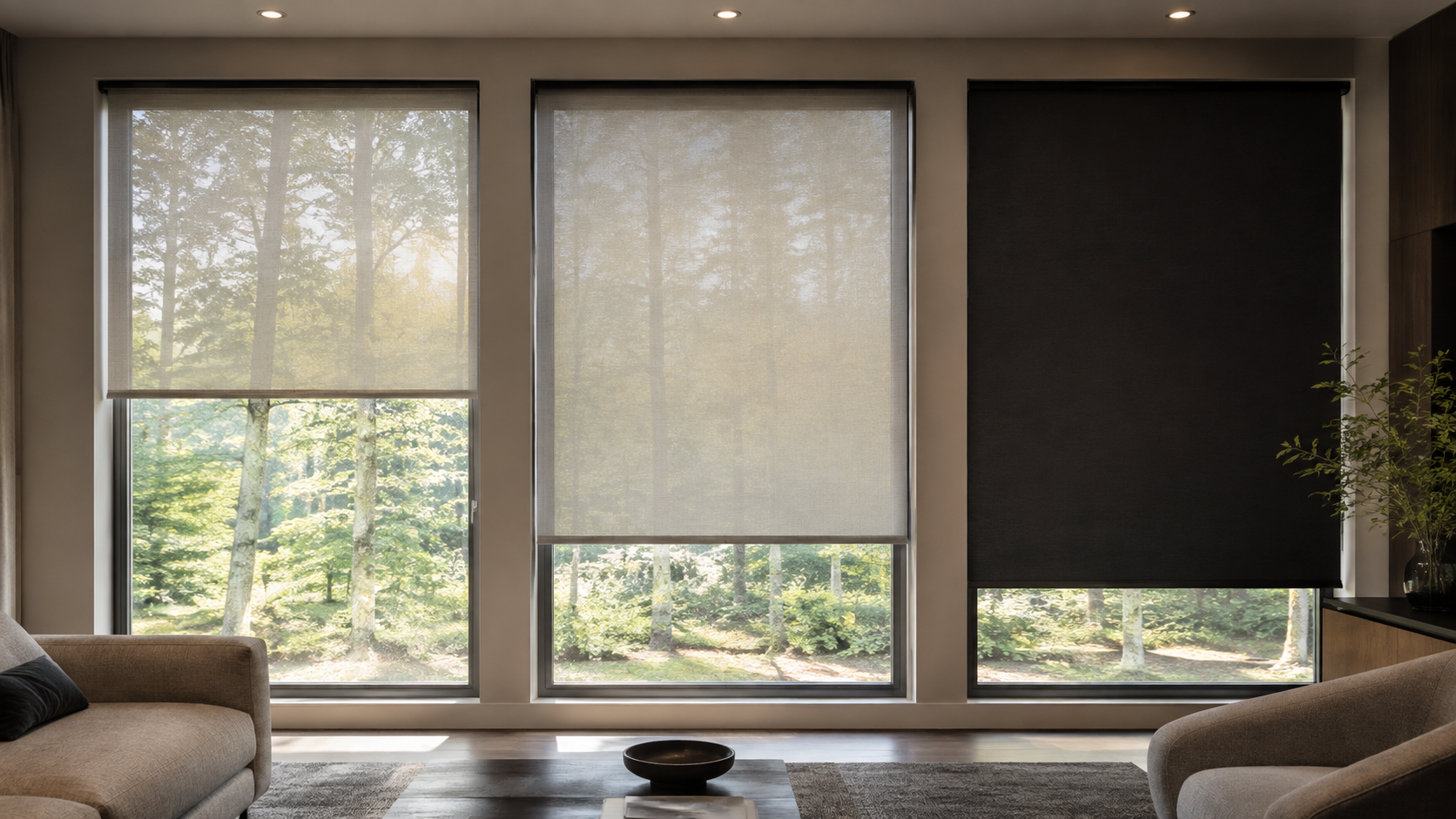
Openness Changes The Experience
More open preserves the view. More closed increases screening.
01
Open-weave solarStronger outward visibility and daylight; less screening and privacy.
02
Tighter solar weaveA middle path for glare, solar control, and a softened view.
03
Translucent privacyDiffuses daylight and obscures details without making the room feel closed.
04
Blackout or room-darkeningBest for bedrooms and media spaces, but edge light and mounting details still matter.
Color Is Performance, Too
The same openness factor can look and behave differently in another color.
Darker fabrics
Often improve outward view and reduce reflected glare, while reading stronger on the glass.
Lighter fabrics
Can feel softer and brighter indoors and may reflect more solar energy, but can veil the exterior view.
Exterior appearance
Consider how every shade reads from outside, especially on a prominent façade.
Interior palette
Evaluate the fabric beside paint, stone, wood, flooring, and artificial light—not in isolation.
Sample At The Actual Window
A small memo sample cannot tell the whole story.
View the largest practical sample vertically at the intended window. Check it facing the sun, with the sun behind it, from across the room, and from outside after dark.
Important: A solar fabric that provides daytime screening may reverse at night when the interior is brighter than outside. If nighttime privacy matters, plan a privacy fabric, blackout layer, or dual-shade solution.
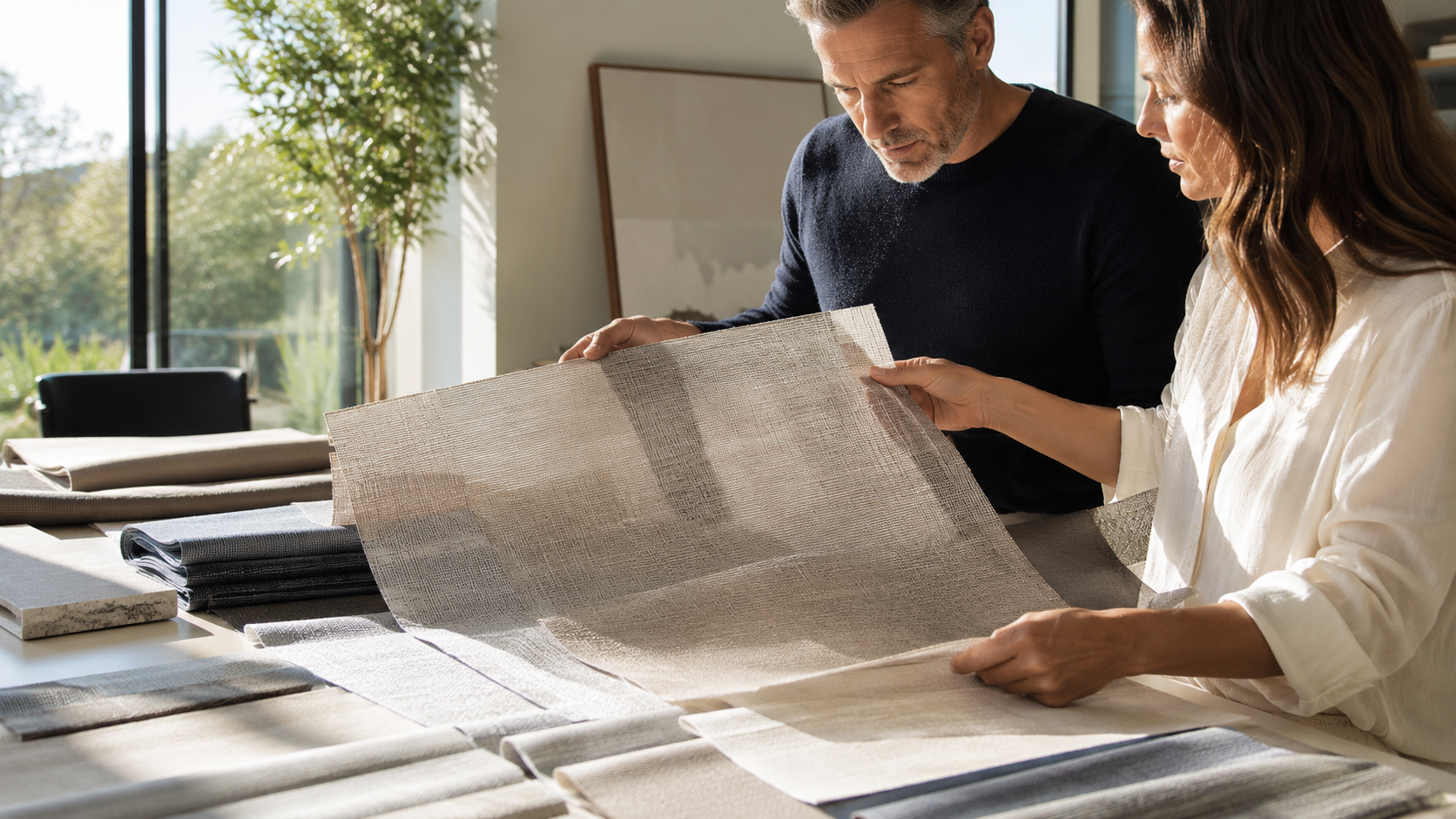
How SES Finds The Right Combination
We design the daylight experience before specifying the fabric.
The result may be one fabric throughout a room, different fabrics by elevation, or a dual-shade solution. SES arrives at that answer through evidence—not guesswork.
01 · Discover
We ask how each room is used, which views matter, when privacy becomes important, where glare appears, and how dark the space must become.
02 · Read the windows
SES considers orientation, glass size, neighboring sightlines, overhangs, seasonal sun, interior lighting, and the exterior appearance of the home.
03 · Build the fabric strategy
We narrow openness, opacity, color, texture, and performance by room. Large elevations may need a different answer from sheltered windows.
04 · Test in real light
Promising samples are viewed vertically at the actual window in changing daylight. Privacy choices are checked from outside after dark.
05 · Coordinate the system
SES matches fabric to roller size, pocket or fascia, side channels, power, controls, lighting scenes, and installation tolerances.
06 · Program and refine
After installation, we align shade positions, build useful scenes and schedules, confirm quiet movement, and teach the household simple control.
Example: an open great room
A view-preserving solar fabric might serve protected windows, while a tighter weave handles western glare. A dual shade can add evening privacy without sacrificing the daytime view.
Example: a bedroom suite
A softer daylight layer can support mornings while a blackout layer, coordinated side channels, and a Goodnight scene create privacy and stronger room darkening.
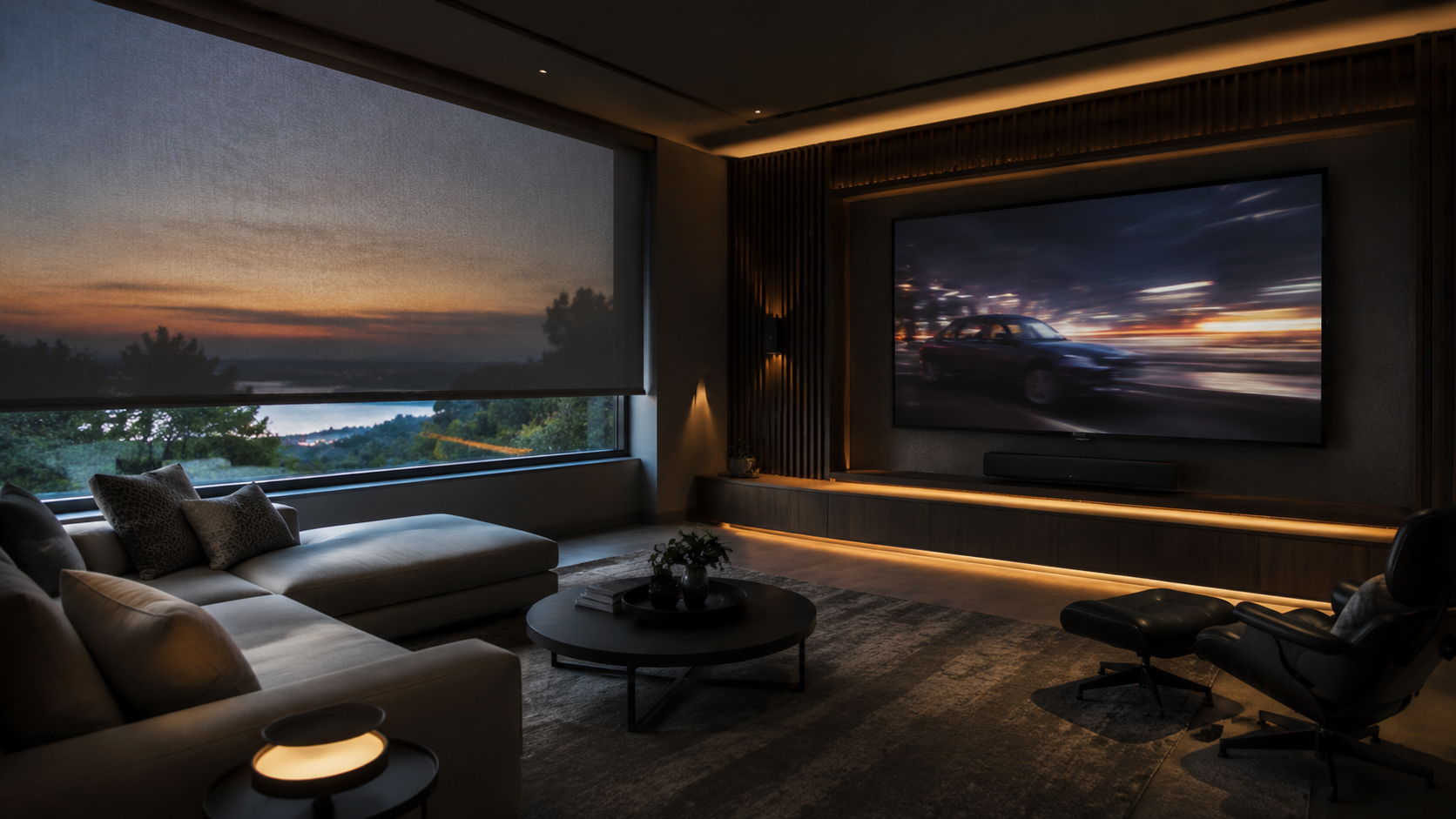
Match The Fabric To The Room
Performance is specific—not universal.
Fabric Collections We Can Explore
Choose from the project need—not the brand name alone.
Shade Innovations from SI
A broad fabric ecosystem supporting indoor roller shades, dual shades, drapery, and outdoor applications. SI’s Fabric Wizard can help narrow choices around style and application.
Draper At Home
Customized shade fabrics designed around style, comfort, UV protection, and privacy, including fabrics associated with Phifer and Mermet and custom color-matching options.
Lutron
Curated textiles and accessories across roller, cellular, Roman, tension, blind, and drapery families, with daylight automation that can coordinate with lighting control.
Shade Fabric Consultation Request
Tell SES what the windows need to accomplish.
You do not need to know the fabric or shade model. Share what you know, and SES will help identify the right combination.
Project
ZIP code, project stage, timing, and approximate number of windows.
Rooms
Room names, window directions if known, and which views should remain.
Priorities
Privacy, glare, heat, UV, room darkening, design, or a combination.
Consultation
Phone, video, or an in-home conversation depending on the project.
Start My Shade Fabric RequestUse the SES Contact PageCall (571) 657-3001
Requests are routed to [email protected]. Please do not include access codes or other sensitive information.
Sources and image rights
Concepts checked in August 2026 against official Shade Innovations, Draper At Home, and Lutron sources. All four visuals are original SES editorial assets generated for this article and are brand-neutral concepts.