
Watch the SES film
A day in light.
A softer welcome.
A richer landscape.
A quieter night.
From the first light of morning to the last conversation on the patio, thoughtful landscape lighting gives every part of the day its own atmosphere.
Narrated film. Select play to listen.
Designed around the way you live
Your landscape deserves an evening of its own.
A beautiful home does not end at the front door. It continues along the walkway, through the garden, and across the places where you gather outside. After sunset, lighting determines which of those details you still experience.
Smart outdoor lighting brings those spaces into a coordinated design. A path can welcome you home, a tree can add depth to the view from your living room, and a terrace can settle into a softer mood as the evening winds down. The most useful system follows your routine and remains easy to adjust when plans change.
One home · Five moments
Let the light follow the day.
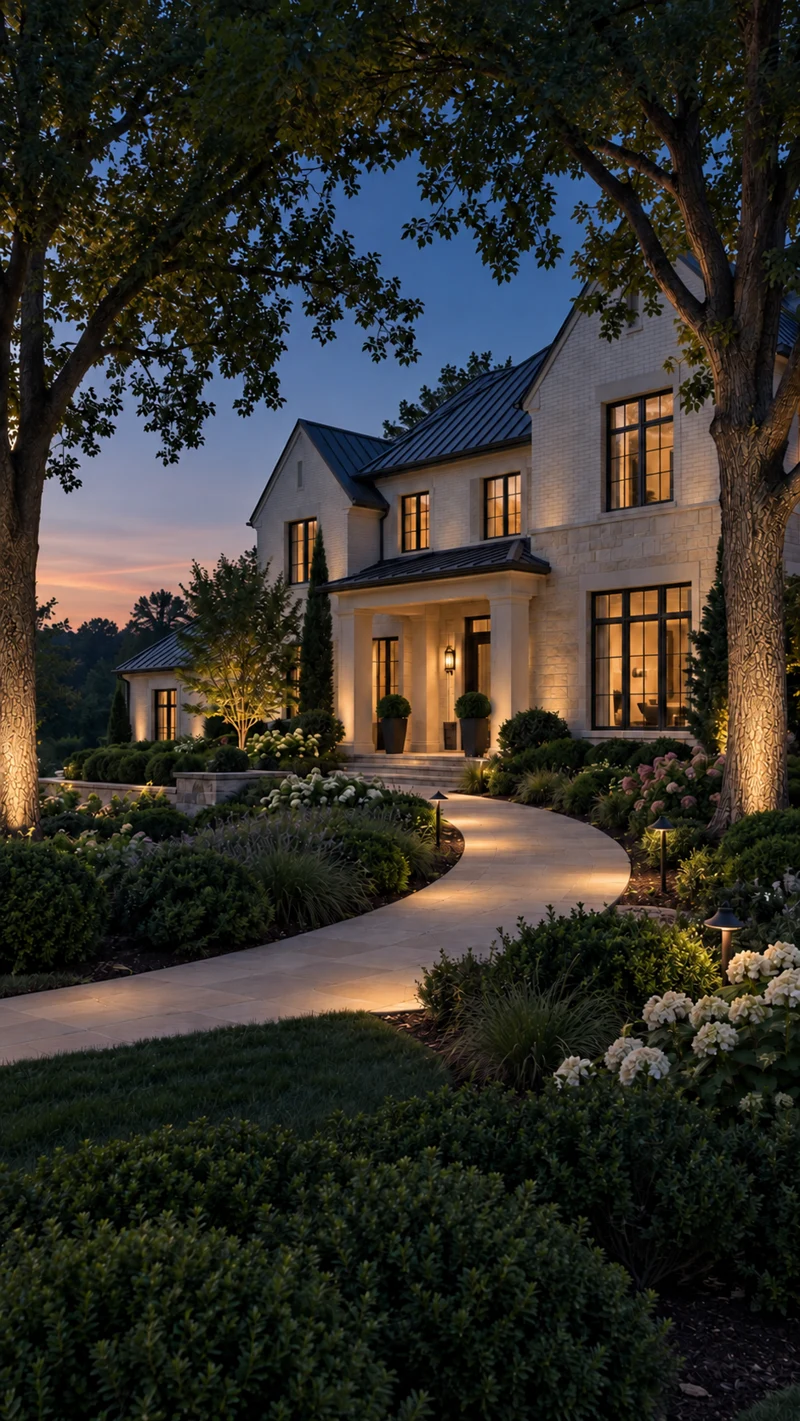
01 · Sunrise
Let daylight take over.
As natural light returns, overnight lighting can step down and switch off. The gentle fade in the film illustrates the feeling to aim for; the actual transition depends on the selected fixtures and controls. SES can plan a sunrise-based routine so seasonal changes do not require a new fixed timer setting every few weeks.
02 · Sunset
Come home to a softer welcome.
As the sky darkens, bring up the arrival areas: the approach, front steps, and entrance. Add restrained light to the planting and architecture that frame the journey. Separating those groups lets the path remain useful without making the entire property equally bright.
03 · After dark
Reveal the details you love.
Warm light can draw attention to stonework, a sculptural tree, or the edge of a garden bed. View the result from inside the house as well as outside. A balanced landscape gives the windows something beautiful to look onto, while shaded fixtures keep bright sources out of direct view.
An atmosphere for the occasion
Make color a choice. Make comfort the everyday setting.
04 · Entertaining
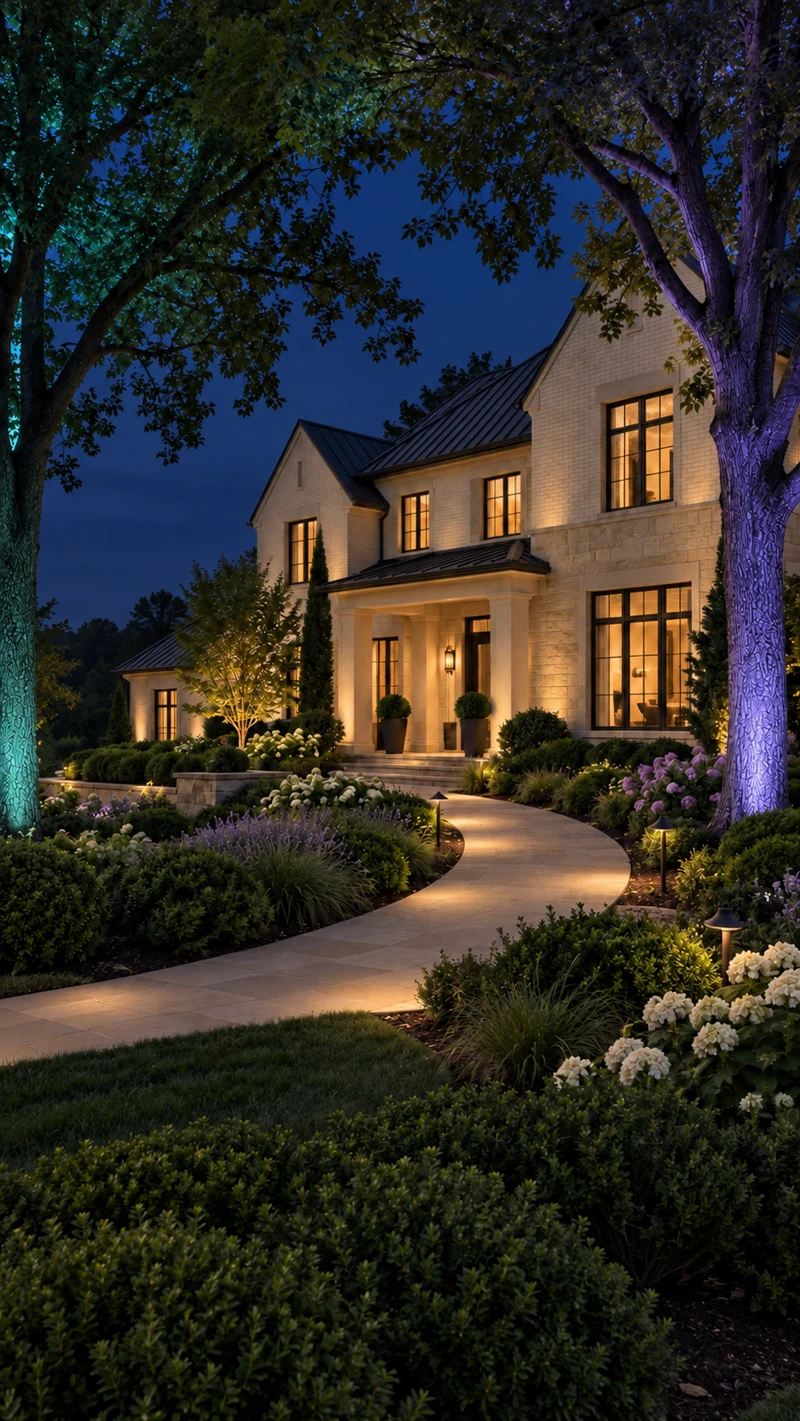
A touch of color changes the mood.
For a celebration, selected landscape accents can take on a richer palette. The film explores teal and violet as an occasional scene. Keep circulation areas in a practical white light and concentrate color where it contributes to the gathering. Color-changing effects require compatible color-capable fixtures; an app cannot add that ability to a standard white-light fixture.
05 · Late evening
Give the evening a gentle close.
When guests leave or the household settles in, reduce decorative lighting and keep only the areas still being used illuminated. A late-night scene can have a clear finish, with an easy manual adjustment for the nights when you stay outside longer.
The lighting plan
Build the landscape in layers.
Begin with the routes and spaces you use, then add the features that give the property character. Each layer should have a purpose and a useful level of control.
01
Walkways & steps
Start with where people move. Low-profile path lights and discreet step or hardscape lighting can define changes in level. Place the light on the walking surface, and check the approach from both directions.
02
Trees & planting
Choose a few focal points to give the garden depth. Aim each beam at the feature it is meant to reveal, account for seasonal growth, and keep unnecessary spill away from neighboring windows and open sky.
03
Architecture & gathering
Use restrained light to reveal textures and make the patio comfortable to use. Concealed sources and careful shielding help the space feel welcoming from a seated position as well as from the street.
Control that supports the design
Simple scenes need the right system behind them.
A thoughtful plan separates the arrival path, garden accents, and entertaining areas into useful groups. That makes it possible to adjust one part of the landscape without changing every light on the property.
FX Luminaire’s Luxor is one example of a landscape-lighting platform built around grouping, dimming, and color control. Its compatible devices offer different levels of capability, and app access requires the appropriate network connection. SES confirms the fixture, controller, and networking combination before specifying an experience. See Luxor capabilities.
Luxor programming supports events tied to sunrise, sunset, or a chosen time, with location-based solar timing and offsets. That provides a practical basis for arrival and late-evening routines. The smooth transitions shown in the film are a design concept; fade behavior must be verified for the proposed system. See scheduling details.
A quieter landscape
Leave room for the night.
Good outdoor lighting needs restraint. Shield the source, aim light where it serves a purpose, choose comfortable levels, and use warmer light for the everyday scene. Turn decorative layers down or off when they are no longer needed.
DarkSky International and the Illuminating Engineering Society organize responsible outdoor lighting around purpose, direction, intensity, timing, and warmer color. These principles are useful design checks when reviewing the garden from your patio, your windows, and the neighboring property. Read the five lighting principles.
The SES approach
Designed for your home. Refined in your landscape.
01
Discover
Walk the property, identify the views and routes that matter, and discuss how you use the space.
02
Design
Select lighting layers, fixture locations, shielding, control groups, and the installation approach.
03
Program
Create everyday and occasional scenes, with clear start and end times and straightforward controls.
04
Refine after dark
Check glare, beam placement, brightness, and timing from the actual places you sit, walk, and look outside.
The final design should account for existing wiring, power and control equipment, planting, maintenance access, and any applicable community requirements. Planning those details early helps the finished experience feel simple every day.
Visuals: AI-generated concept imagery created for this SES project, with supplied Adobe Firefly footage and synthetic narration. The home and lighting scenes illustrate a design direction; they are not photographs of a completed SES installation or a demonstration of a specific manufacturer’s products. Product selection, compatibility, and final scene behavior are confirmed during design.