

The Simple Difference
One enclosure—or specialized components working together.
An AV receiver combines source switching, surround processing, room correction, control, and amplification in one chassis. AV separates divide those jobs between a processor and one or more power amplifiers. Separates can provide greater power, control, flexibility, and isolation; an AVR often delivers the cleaner, more efficient solution for a moderately sized system.
AV Receiver
Integrated and efficient.
A strong fit when one chassis can comfortably power the speaker system and the homeowner values simplicity, lower rack space, and an efficient budget.
- Family rooms and many media rooms
- Moderate channel counts and listening levels
- Clean installation with fewer components
- Optional pre-outs can preserve an upgrade path
AV Separates
Specialized and scalable.
A processor handles formats, switching, calibration, and control while dedicated amplifiers drive the speakers. This is often the stronger path for larger rooms, demanding speakers, or ambitious expansion plans.
- Dedicated theaters and high-output systems
- More channels or difficult speaker loads
- Independent processor and amplifier upgrades
- Greater power reserves and system flexibility
A Current Reference Path
Marantz AV 20 and dedicated amplification.
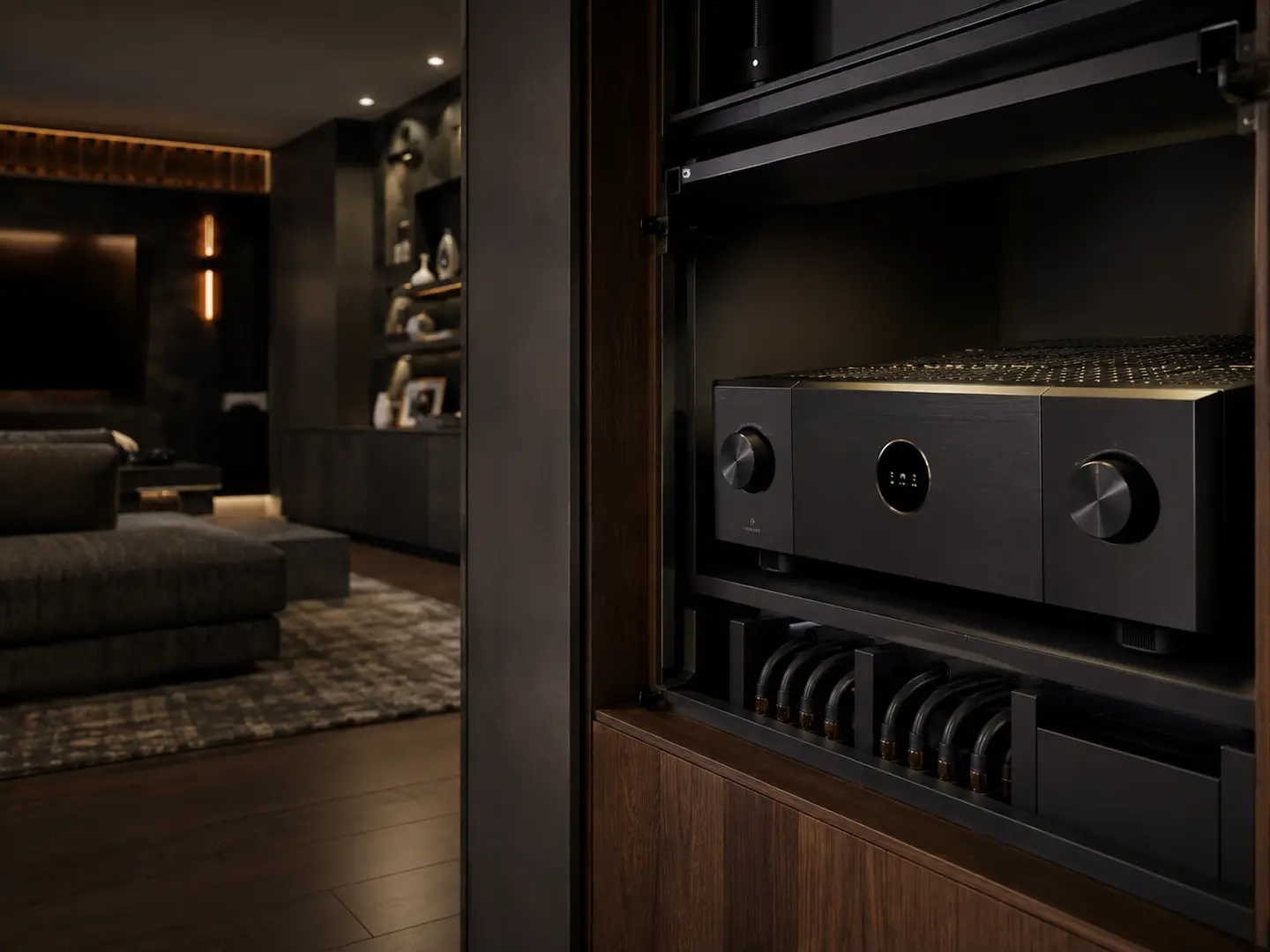
Marantz positions the AV 20 as a 13.4-channel balanced preamplifier for reference-level theater systems, with seven 8K-compatible HDMI inputs, immersive audio formats, and four independent subwoofer outputs. It illustrates the separates approach: processing and system control in one component, speaker power supplied by matched external amplification.
Five Decisions
What SES evaluates before recommending either path.
SES Perspective
Buy the architecture the room needs—not the longest specification sheet.
The best system is properly matched, installed, cooled, calibrated, and easy for the household to enjoy. SES can model both approaches before equipment is selected, including the cost and infrastructure needed for future expansion.