
SES home theater planning guide
The better display is the one that fits the room.
A television can be the effortless center of a bright family room. A projector can turn a controlled-light room into a cinematic experience. The right answer is not a contest between technologies. It comes from the room, the viewing distance, the time of day, the content, and how the household wants the space to feel.
SES begins with those conditions, then coordinates the display with seating, sound, shades, wiring, control, and service access. That order keeps a dramatic specification from becoming an awkward everyday system.
At a glance
Three useful starting points.
TV
Bright or multipurpose rooms
A direct-view television is often the simpler fit when daylight, casual viewing, quick startup, and a compact equipment footprint matter most.
Projector
Controlled-light rooms
Projection becomes compelling when cinematic image scale is the priority and the room can support light control, screen placement, throw distance, and service access.
Hybrid
Two viewing modes
A television plus a retractable projection screen can serve different occasions, but it needs careful depth, speaker, wiring, and control planning.
Before choosing hardware
Begin with five room facts.
Industry guidance from AVIXA, CTA, CEDIA, and THX treats image size as a relationship among content, viewing position, sightlines, and the intended experience. A wall that can physically hold a large image does not automatically make that image comfortable from every seat.
01
Viewing distance
How far is each seat from the image, and what field of view feels comfortable for movies, sports, and everyday television?
02
Ambient light
Which windows, fixtures, and reflective finishes affect the image during the hours the room is actually used?
03
Architecture
Is there a suitable wall, ceiling, screen location, projector path, equipment location, and route for power and signal?
04
Seating and sound
Can every important seat see the full image while the speaker layout remains coherent and unobstructed?
05
Sources and control
Which streaming devices, games, television sources, presets, and family routines must work without friction?
WHEN A TV FITS
Choose ease in a shared room.
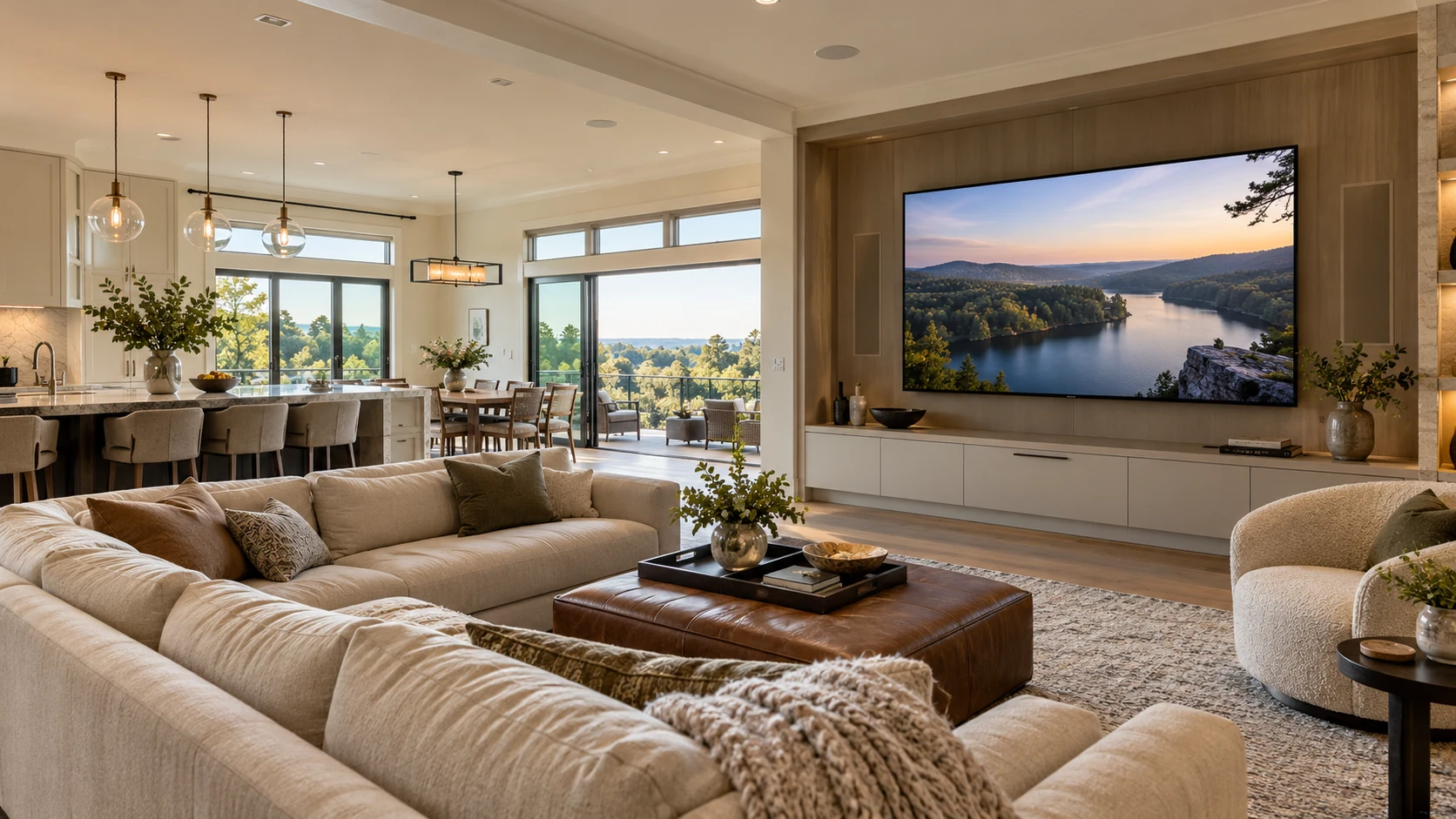
A television is usually the more direct path for a family room, kitchen-adjacent space, or multipurpose lounge that stays bright during the day. It occupies less ceiling space, does not require a projection path, and can move from news to games to a movie with familiar daily behavior.
The design still matters. SES would review screen height, seating distance, window reflections, cabinetry, ventilation, sound, network, power, and concealed wiring. If daylight is the deciding factor, automated shades can improve both comfort and picture consistency without turning the room into a dedicated theater.
WHEN PROJECTION FITS
Choose scale with room control.
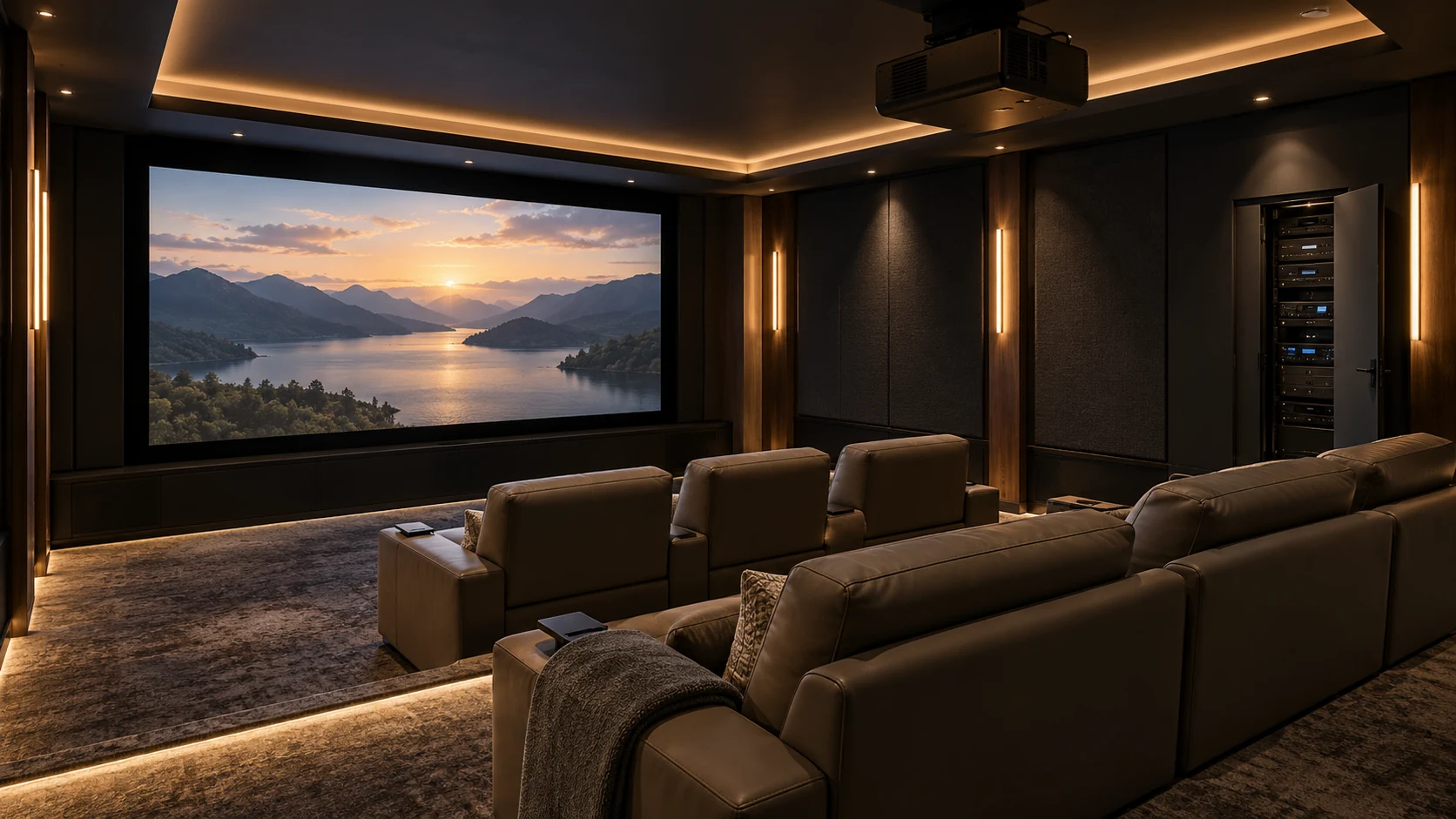
Projection is strongest when the experience calls for a much larger image and the room can support it. A dedicated cinema is the natural example, but a thoughtfully planned media room can also work when light, screen, and projector placement are resolved together.
SES would confirm the viewing geometry, screen material, projector location, throw path, brightness requirements, ventilation, signal transport, blackout strategy, and service access before selecting equipment. The ceiling position cannot be treated as an afterthought, and the screen should be planned with the speakers rather than around them.
Sound belongs in the same decision
The image changes the speaker plan.
A television usually places the center speaker below or above the picture, unless the architecture supports another approach. A projection system may use an acoustically transparent screen so front speakers can sit behind the image, but only when the screen material, speaker locations, viewing distance, and acoustic design support that choice.
CEDIA’s RP22 guidance reinforces a larger point: immersive audio performance depends on a defined system and room design, not only on the number of speakers. SES coordinates the display and audio layouts early so the best-looking option does not compromise dialogue, coverage, or sightlines.
A hybrid room
Two displays can work, if they behave like one system.
A retractable screen can descend for movie night while a television handles everyday viewing. The idea is flexible, but the details are demanding. The screen needs a clear path and enough depth, the projector needs correct geometry, speakers cannot be casually blocked, and sources must switch to the right display and audio mode.
The control sequence should also manage shades and lighting, then return the room to its normal state without a checklist. SES treats the hybrid option as a coordinated room design, not as two independent displays sharing a wall.
The practical answer
Let the room decide.
Choose a TV if
The room is bright, viewing is frequent and casual, the desired image fits the wall, and simple daily operation matters most.
Choose a projector if
Cinematic scale is the priority, light can be controlled, the room supports the throw path, and seating is planned around the screen.
Consider a hybrid if
The room genuinely needs two viewing modes and can support the added depth, infrastructure, audio planning, programming, and service access.
Start with SES
Bring us the room before the model number.
Share photos or plans, the main seating locations, the times of day you watch, and the experiences that matter most. SES can evaluate the room, compare the television, projection, or hybrid paths, and provide a coordinated project estimate.
Request a display planning conversation
Call (571) 657-3001 | Explore residential services
For more ways to shape an entertainment experience around the room, read Kaleidescape in Four Spaces.